
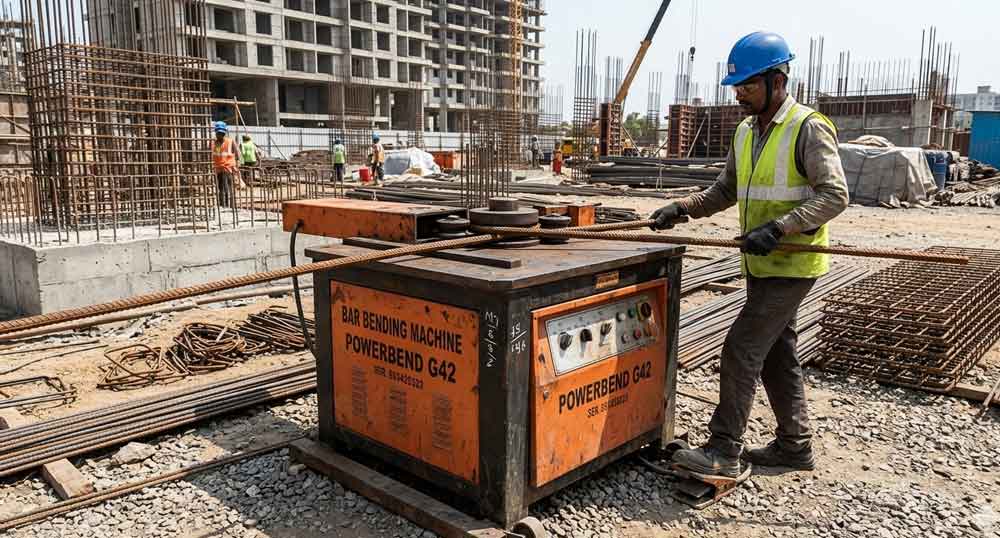
If you have ever stepped foot on a construction site, you know that time is money, and precision is paramount. At the heart of every strong, durable concrete structure is its skeleton—the reinforcement bars (rebars). But shaping these heavy-duty steel bars to exact specifications is no easy task. Enter the unsung hero of modern construction: the Bar Bending Machine.
Whether you are a seasoned contractor or setting up a new construction business, understanding the value of a high-quality bar bending machine can completely transform your workflow. In this blog, we will dive into what these machines are, their benefits, and how to choose the right one for your projects.
A bar bending machine is a specialized piece of equipment used to bend steel rebars and TMT bars into various angles and shapes. In the past, this was done manually using hand tools and sheer physical force—a process that was incredibly slow, inconsistent, and highly prone to causing worker injuries.
Today, bar bending machines automate this process, using mechanical or hydraulic power to bend thick steel bars with pinpoint accuracy in a matter of seconds.
Not all construction sites are created equal, and neither are bar benders. Depending on the scale of your operation, you generally have three main options to choose from:
Manual Bar Benders: Operated by hand using a lever system. These are highly portable and cost-effective, making them suitable for very small projects or tight spaces where electricity is not available.
Electric / Semi-Automatic Bar Benders: The most common choice for medium to large construction sites. Powered by an electric motor, these machines can bend multiple bars simultaneously. The operator sets the angle, feeds the bar, and steps on a pedal to execute the bend.
CNC Automatic Bar Benders: The heavyweights of the industry. These computer-controlled machines are used in massive infrastructure projects and steel manufacturing yards. You input the exact design parameters into a digital interface, and the machine cuts and bends the steel automatically with zero human error.
Still relying on manual labor to bend your steel? Here is why upgrading to a machine is one of the best investments you can make:
Manual bending often results in slight variations in angles, which can compromise the structural integrity of a building. A machine ensures that every single bar is bent to the exact same angle, every single time, ensuring perfectly uniform stirrups and supports.
A machine can bend a thick 32mm TMT bar (or multiple thinner bars at once) in 3 to 5 seconds. What takes a crew of laborers hours to accomplish manually can be done by one machine operator in a fraction of the time, keeping your project ahead of schedule.
Bending steel by hand causes severe strain on workers' backs and shoulders, leading to frequent injuries and downtime. Mechanizing the process removes the physical toll from your workforce, promoting a safer, more productive work environment.
While buying a machine requires an initial upfront investment, it pays for itself rapidly. By speeding up the construction timeline and reducing the number of laborers needed for steelwork, your overall project costs drop significantly.
If you are ready to make a purchase, keep these crucial factors in mind:
Bending Capacity: What is the maximum diameter of the bars you typically use? Machines are usually rated by their maximum bending capacity (e.g., up to 28mm, 32mm, or 42mm). Always buy a machine with a slightly higher capacity than your average requirement.
Motor Power and Voltage: Ensure the machine's motor is robust enough for continuous operation. Also, check if your site supports the required power supply (Single-phase vs. Three-phase).
Portability: If you need to move the machine frequently around the site, look for models equipped with heavy-duty caster wheels and lifting hooks.
Durability and Warranty: Construction environments are harsh. Choose a machine with a solid steel body, high-quality internal gears, and a reliable manufacturer's warranty.
The construction industry is evolving rapidly, and staying competitive means adopting tools that increase efficiency and safety. A bar bending machine is no longer a luxury; it is an absolute necessity for delivering high-quality structures on time and within budget.
By investing in the right equipment, you are not just bending steel—you are building a stronger, more profitable future for your business.
©Copyright 2026 JAISHREETECH INDUSTRIES | Design By Webbelvate